
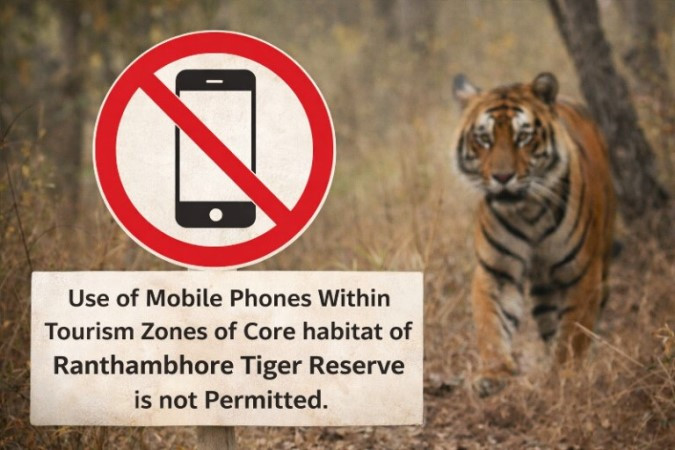
Mobile-Free Safari at Ranthambore National Park: A Positive Step for Wildlife and Responsible Tourism
Ranthambore has always been known for providing magnificent and respectful wildlife experiences. Keeping this spirit in mind, a new guideline has been introduced that aims to make the safari experience even more memorable for both visitors and the animals that inhabit the forest. To protect wildlife, maintain their natural behavior, and promote responsible tourism, the forest department has banned mobile phones during safaris in Ranthambore National Park.
According to the latest ruling, the use of mobile phones during safaris has been prohibited. This measure has been taken in accordance with the guidelines of the Supreme Court of India and aims to strengthen wildlife conservation and promote responsible tourism practices.
Why a Mobile-Free Safari Matters
This decision is not about limiting tourists, but about protecting the natural rhythm of the forest. When mobile phones are used for selfies, videos, or reels, they can inadvertently disturb the wildlife and the peaceful atmosphere of the forest.
A mobile-free safari helps ensure that:
- Animals are not disturbed by noise or sudden movements
- Wildlife behavior remains natural and stress-free
- The forest atmosphere stays calm and silent
- Tourist safety is enhanced inside the core zones
Supporting Natural Wildlife Behaviour
Wild animals, especially tigers, are very sensitive to the presence of humans. Frequent stops, crowded safari vehicles, and the noise from mobile phones can affect their movements and behavior.
This guideline encourages visitors to:
- Observe wildlife patiently and respectfully
- Enjoy sightings without rushing or pressure
- Let animals move freely without interference
By doing so, Ranthambore is fulfilling its commitment to ethical wildlife tourism.
What Tourists Should Know Before the Safari?
To ensure smooth implementation, a simple system will be followed:
- Mobile phones will be deposited before entering the safari zone
- Cameras are permitted, following existing forest rules
- Guides will assist tourists to ensure a hassle-free experience
This process allows visitors to focus fully on the safari rather than screens.
A Step towards Responsible Tourism
Responsible tourism means striking a balance between memorable experiences and conservation. This initiative is in line with national wildlife conservation efforts and the guidelines issued by the National Tiger Conservation Authority (NTCA).
The mobile-free safari:
- Promotes mindful wildlife viewing
- Reduces crowding at sightings
- Encourages deeper connection with nature
Experiencing the Jungle, the Way It's Meant to Be
Ranthambore offers much more than just photo opportunities; it provides moments of peace, wonder, and awe. By minimizing mobile phone use during safaris, visitors have the chance to truly experience the forest, listen to its sounds, and respect its inhabitants.
This well-considered decision strengthens Ranthambore's identity as a place that values conservation, protection, and authentic wildlife experiences.
In conclusion, these guidelines are a positive step towards improving the quality of the safari experience while protecting wildlife. A peaceful forest means healthier animals and more memorable moments for everyone.