


Ranthambore National Park has once again brought exciting news for wildlife lovers and
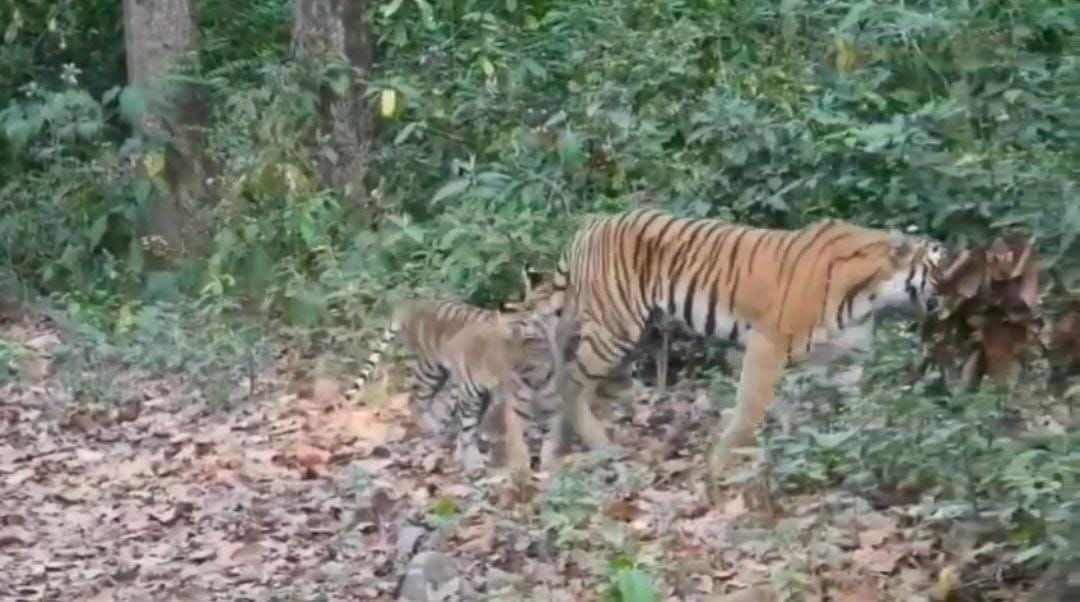
conservation enthusiasts.Tigress T-127 has been spotted roaming with her two cubs in Zone 7 of the Ranthambore tourism area. This marks another encouraging milestone for one of India's most successful tiger habitats.
This sight has sparked excitement among forest officials, wildlife photographers, tourists, and conservationists, as every successful breeding event reflects the steadily strengthening tiger population in Ranthambore.
Forest Department Had Been Closely Monitoring T-127
According to the Forest Department, tigress T-127 was being constantly monitored after officials observed changes in her physical appearance and behavior, indicating that she might have given birth to cubs.
The teams employed camera traps, field patrolling, and scientific tracking methods to monitor the tigress's movements. These efforts paid off when the tigress was spotted with two healthy cubs.
Divisional Forest Officer (DFO) Manas Singh confirmed that although two cubs have now been sighted, the department has not yet officially confirmed the total number of cubs.
Official Cub Count Yet to Be Announced
Forest officials stated that only two cubs have been directly sighted so far. It is still possible that there are more cubs, but they have not yet been captured on camera or spotted during field monitoring.
Therefore, the Forest Department will announce the official number of cubs only after completing a detailed investigation and continuous monitoring.
In the meantime, monitoring of the tigress's territory will continue to ensure the safety of the cubs and minimize human interference.
Protection Remains the Top Priority
Wildlife officials have stated that protecting the young family is currently their top priority.
Monitoring of the tigress's territory will continue through regular patrols, camera-trap surveillance, and scientific observation. These measures help ensure that the cubs can grow up naturally in a safe environment, free from unnecessary interference.
The cub's survival depends largely on maintaining a safe shelter during the early months of life; therefore, continuous monitoring is a crucial part of conservation efforts.
Who is Tigress T-127?
According to wildlife experts monitoring Ranthambore's tiger population, tigress T-127 is approximately six years old. She is the offspring of tigress T-8 and tiger T-58, both renowned members of the Ranthambore tiger lineage.
Interestingly, there were reports last year as well suggesting that T-127 might have given birth to a cub, but there was no official confirmation of the birth at the time. Therefore, her recent sighting is considered highly significant.
A Positive Sign for Ranthambore's Tiger Conservation
The sighting of new cubs is another encouraging sign of Ranthambore's long-standing conservation success.
Forest officials attribute this success to continuous habitat conservation, scientific wildlife management, effective anti-poaching measures, and the large population of prey species (such as Sambar deer, Chital, Nilgai, and wild boar) present in the reserve.
As an apex predator, the tiger plays a crucial role in maintaining ecological balance. Every successful breeding event reflects the overall health of the forest ecosystem.
Ranthambore's Growing Tiger Population
Currently, Rajasthan's Ranthambore National Park is one of the areas with the highest tiger populations. According to recent estimates, there are approximately 80 tigers in this tiger reserve, including males, females, and cubs.
Once all of tigress T-127's cubs are officially confirmed, this number could rise further.
However, wildlife experts also state that the tiger population in Ranthambore has now exceeded its estimated carrying capacity (approximately 40–50 animals).
Consequently, tigers venturing out to expand their population are rapidly moving towards nearby protected areas, such as Mukundara Hills Tiger Reserve and RamgarhVishdhari Tiger Reserve, as well as forests extending into Madhya Pradesh. Experts believe that strengthening wildlife corridors and expanding interconnected habitats will be essential for the long-term conservation of the growing tiger population.
Why This Sighting Matters
The sighting of tigress T-127 with her cubs is not only exciting news for tourists but also a positive sign of the success of conservation efforts in Ranthambore.
Although the Forest Department is still confirming the total number of cubs, the presence of two healthy cubs alone proves that this reserve is capable of supporting tiger breeding in the wild.
Now, wildlife enthusiasts across India will eagerly await official confirmation of the total number of cubs and hope that this young family continues to thrive safely in the forests of Ranthambore.
https://ranthambhorenationalpark.in/blog/things-to-pack-for-ranthambore-wildlife-tour-holiday-package
https://ranthambhorenationalpark.in/blog/ranthambore-national-park-weekend-package-vs-custom-tour